New planning rules put mining risk back in the spotlight – and it goes well beyond coal
30 September 2026
Read the blog

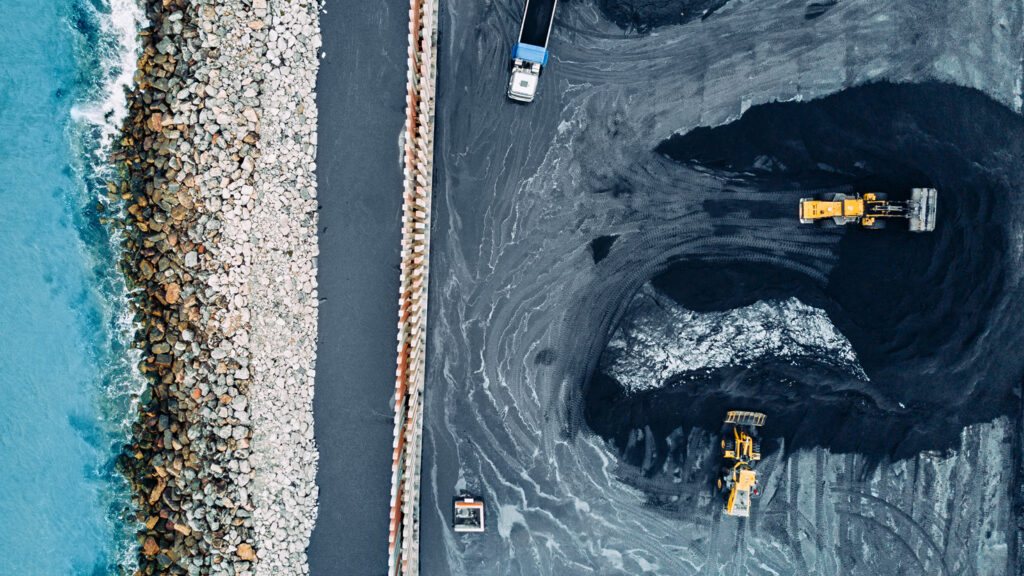
When mining and ground risk appear in a property transaction, the language used can sometimes feel unfamiliar, complex or technical, particularly where historic mining is involved. Yet understanding a few key terms can make a real difference to how risk is assessed and explained.
I have therefore created this A–Z glossary of common mining and ground risk terms, written in plain English and focused on what matters in a property context, to help provide some clarity:
A – Adit
A horizontal or gently sloping tunnel driven into a hillside to access a mine or drain water. Near-surface adits can collapse.
B – Backfill
Material used to fill mined-out voids. Poor backfill can compress over time, causing subsidence.
C – Crown Hole
A sudden surface collapse caused by failure of shallow underground workings or voids.
D – Dissolution
The process by which soluble rocks, such as gypsum, salt or limestone, are dissolved by water, creating instability.
E – Entry (Mine Entry)
Any access point to a mine, including shafts and adits. Unrecorded entries present high collapse risk.
F – Fireclay
A clay historically mined for brick and refractory use. Old workings are often shallow and poorly recorded.
G – Goaf (Gob)
Collapsed or waste-filled areas left after mineral extraction. Can cause delayed ground settlement.
H – Headframe
A surface structure built over a mine shaft to support lifting equipment. Indicates historic shaft locations.
I – Inrush
Sudden inflow of water or gas into underground workings, often associated with collapse or flooding.
J – Joint
A natural fracture in rock. Closely spaced joints can weaken ground and increase collapse risk.
K – Karst
A landscape formed by dissolution of soluble rock, characterised by caves, sinkholes and underground streams.
L – Lode
A mineral-bearing vein or deposit. Historic lode mining often followed irregular paths underground.
M – Metalliferous Mining
Mining for metal ores such as tin, copper, lead or zinc. Often predates coal mining and is less well recorded.
N – Non-Coal Mining
All mining activity excluding coal, including metals, stone, salt, clay and gypsum.
O – Overburden
Soil and rock lying above a mineral deposit. Thin overburden increases collapse risk.
P – Pillar and Stall
A mining method leaving pillars of material to support the roof. Pillar failure can lead to subsidence.
Q – Quarry
An open excavation for stone or aggregates. Historic quarries may later be infilled and built over.
R – Running Measures
Strata which is continually displaced due to their watery or soft characteristics.
S – Shaft
A vertical or near-vertical opening used to access underground workings. Collapse risk remains long after closure.
T – Tip (Spoil Tip)
Surface deposits of mining waste. Historic tips may be unstable or prone to landslip.
U – Underground Workings
All tunnels, chambers and voids created below ground by mining activity.
V – Void
An empty space left after mineral extraction. Voids close to surface present the greatest risk.
W – Water Table
The level below which ground is saturated. Changes can activate the collapse of historic workings.
X – Xenomorphic
An irregular shape impressed by adjacent minerals.
Y – Yield Pillar
A pillar designed to deform slowly under load. Failure can cause progressive subsidence.
Z – Zone of Influence (ZOI)
The surface area potentially affected by underground mining, extending beyond the mine footprint itself.
Whether you’re reviewing a mining search, considering next steps, or simply want to better understand the terminology that underpins ground risk, this starter A-Z guide is designed to help. A more detailed glossary of terms will be published shortly.